
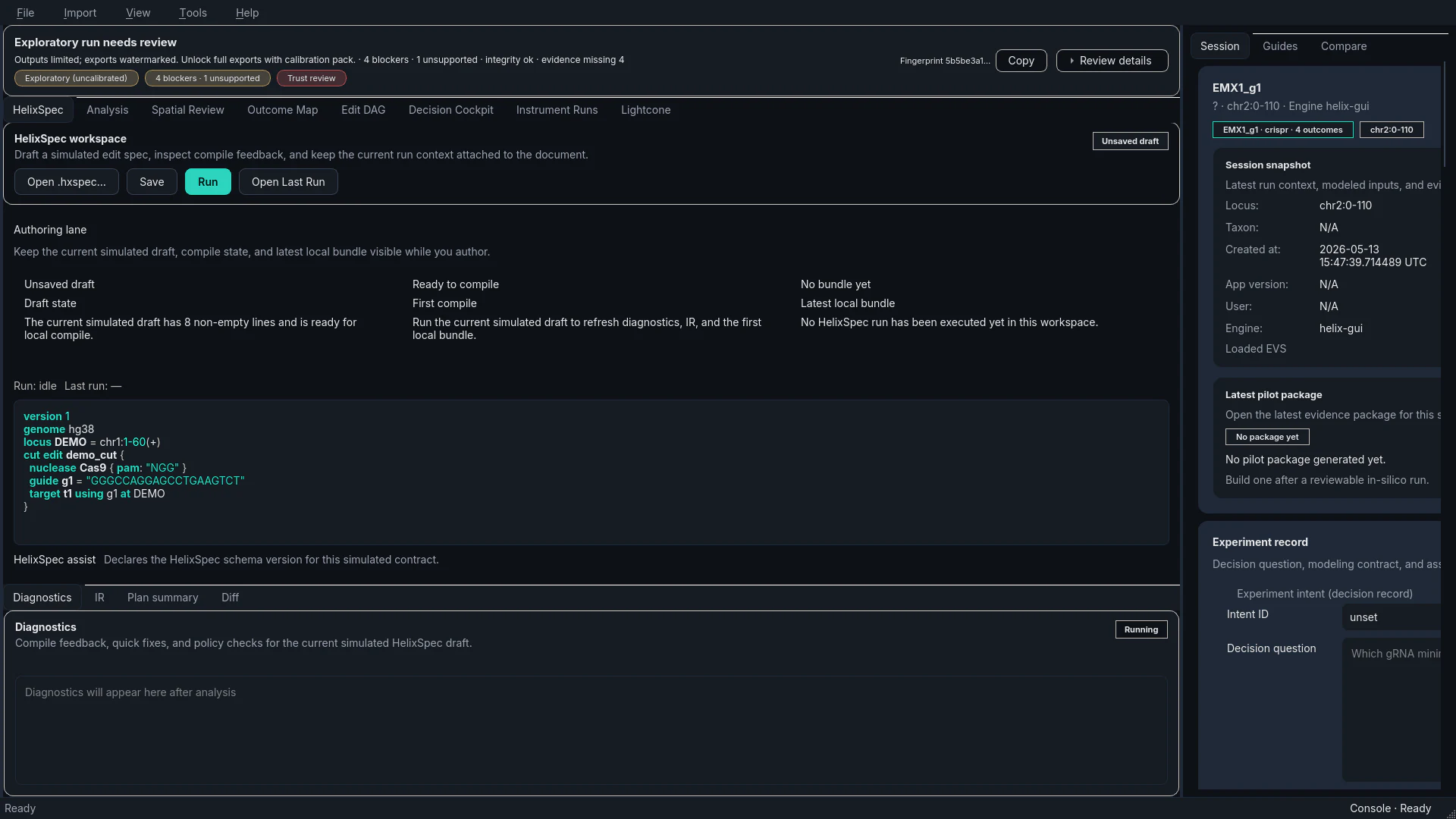
Design intent becomes a reviewable software contract.
Author CRISPR and Prime Editing decisions in one workspace where targets, assumptions, and constraints stay attached to the record.
A professional development environment for designing CRISPR and Prime Editing edits, simulating outcomes, and interpreting sequencing results - all in one place.
Built for biotech teams, genome engineers, and researchers working in the programmable biology era.
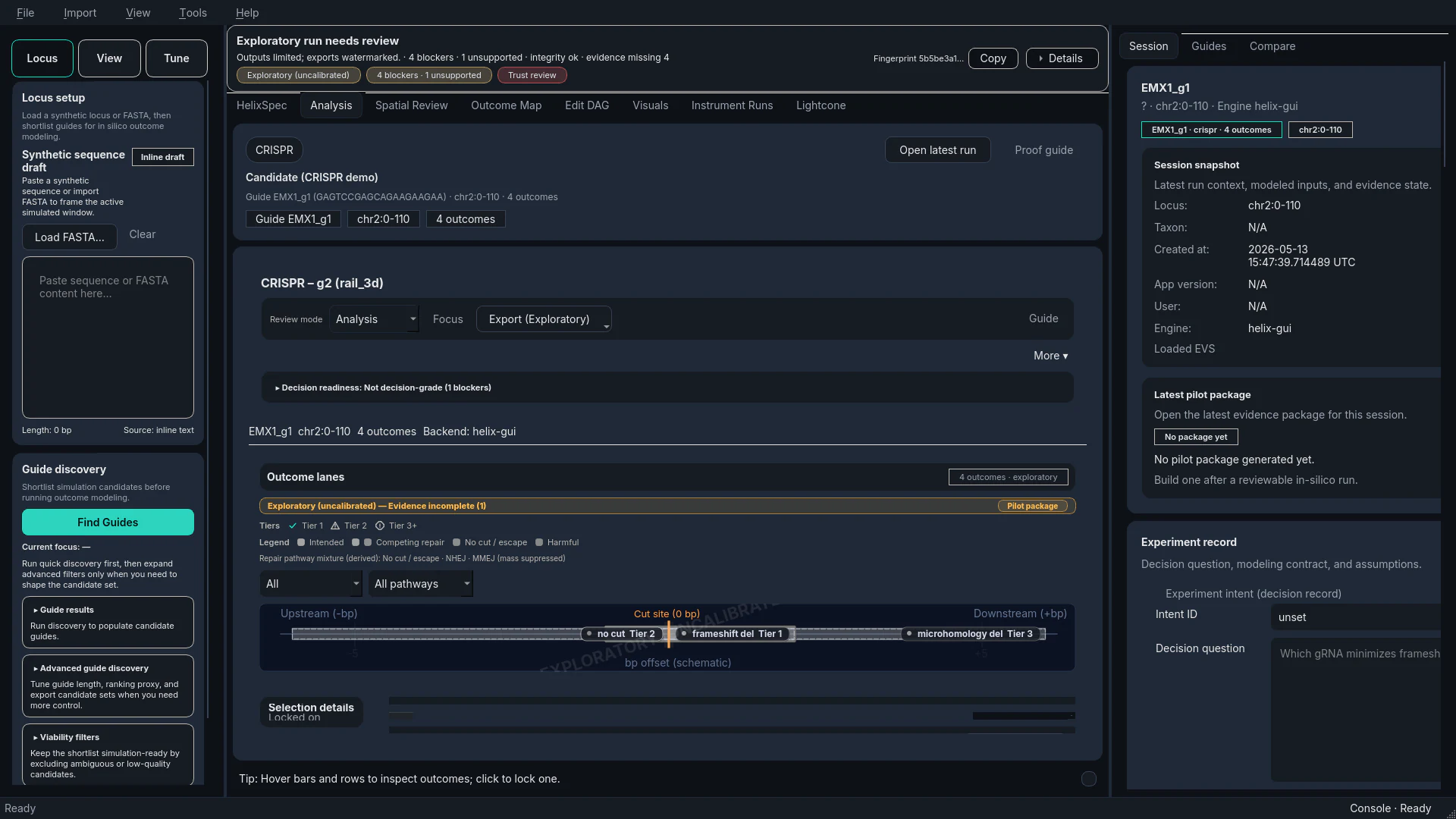
The category shift is simple: genome engineering teams need a professional IDE, not scattered utilities and detached screenshots.
Author CRISPR and Prime Editing decisions in one workspace where targets, assumptions, and constraints stay attached to the record.
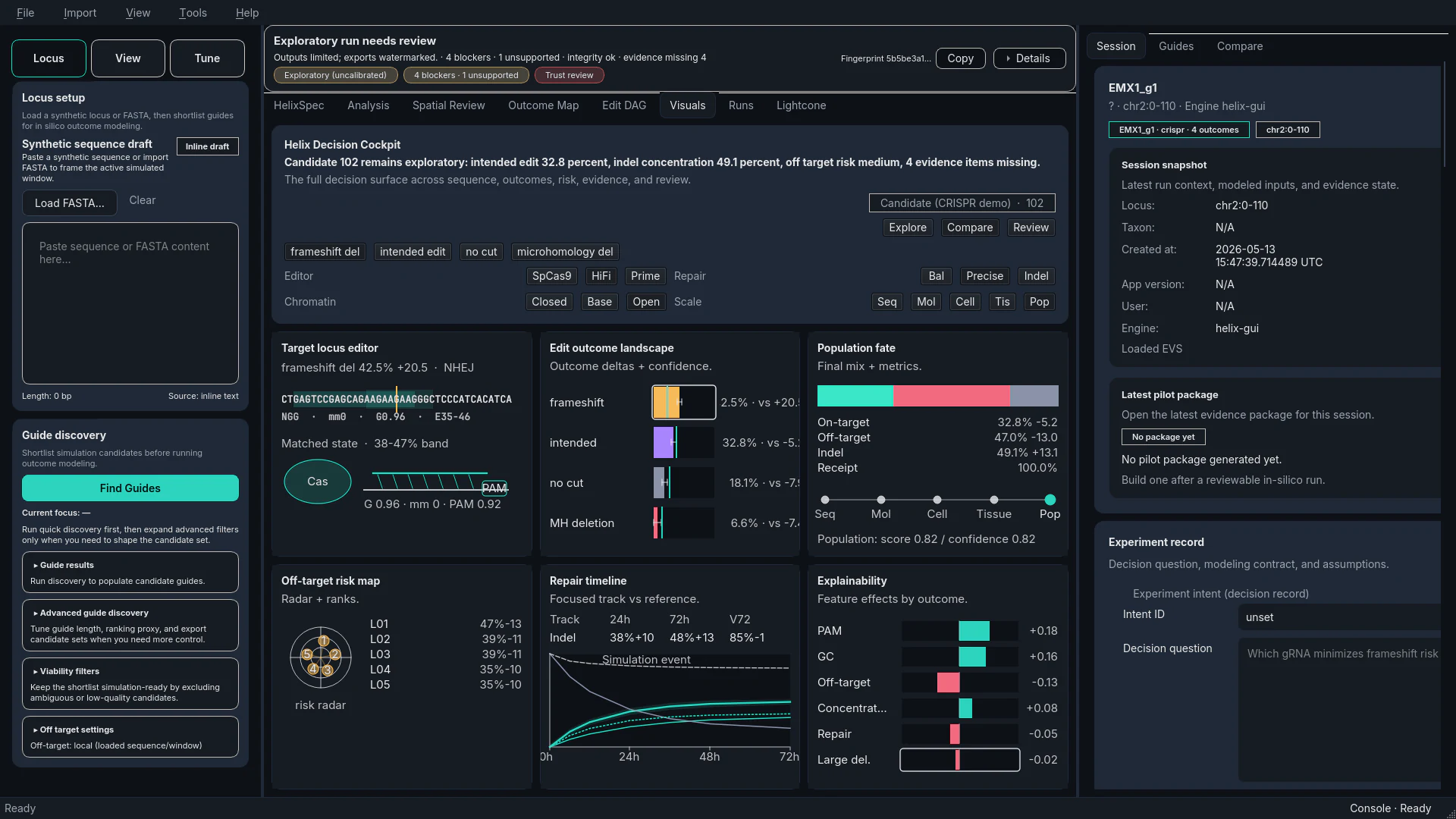
Model expected edit profiles with synthetic inputs, score outputs, and keep every artifact connected to the run context.
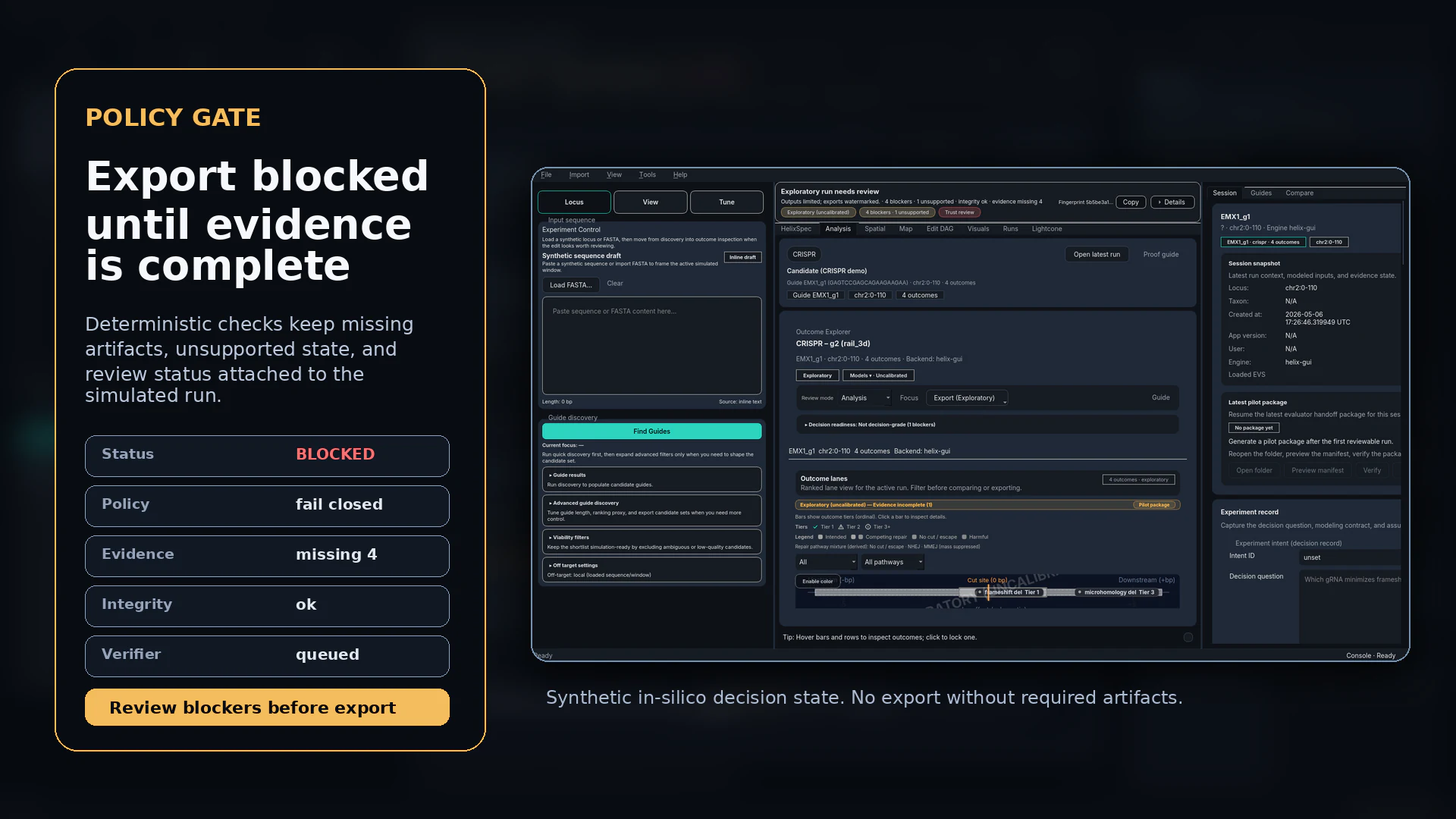
Exports stay blocked until required evidence, provenance, and review checks are present.
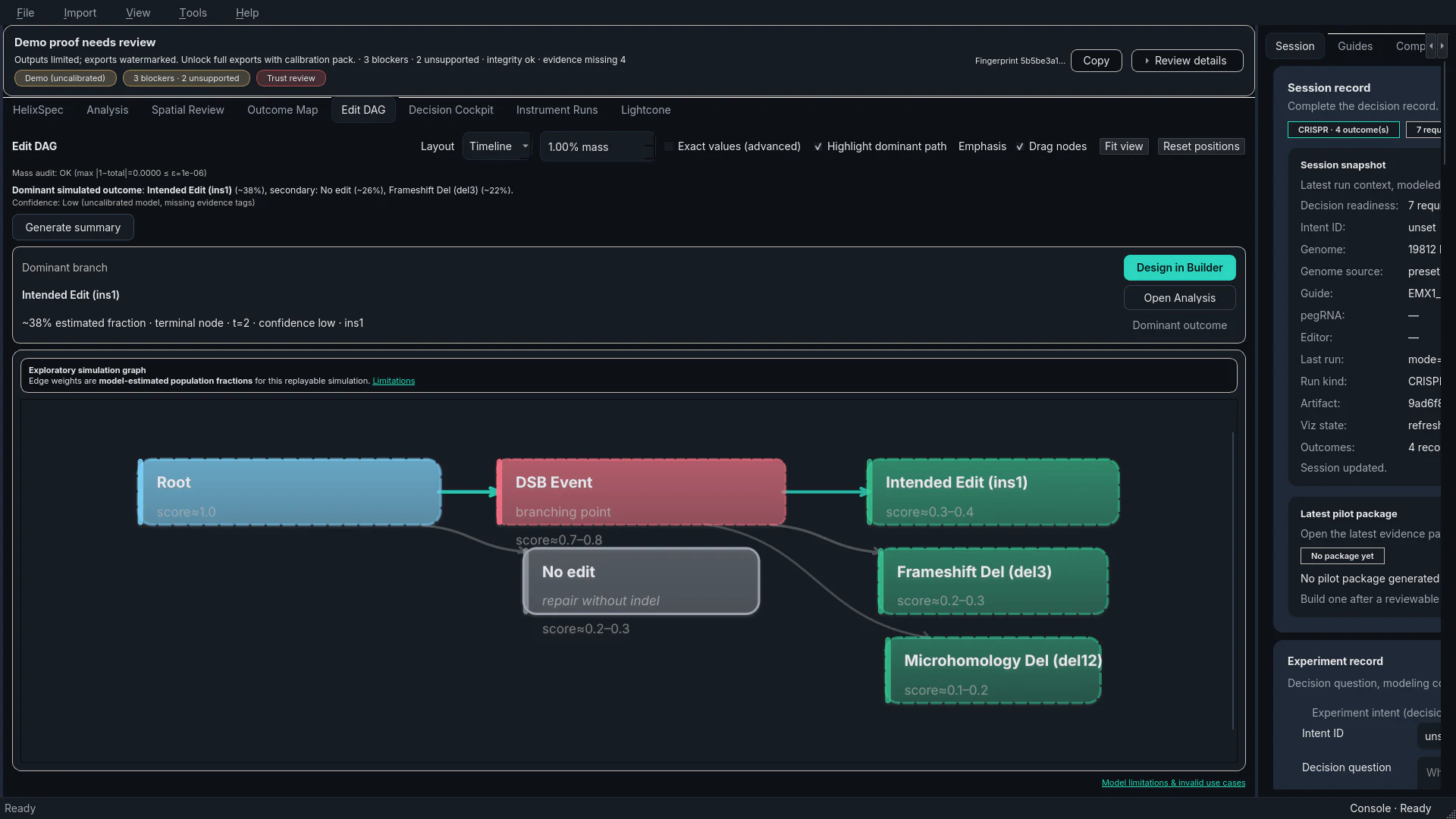
Reviewers inspect manifests, checksum indexes, provenance receipts, and verifier output without relying on narrative summaries.
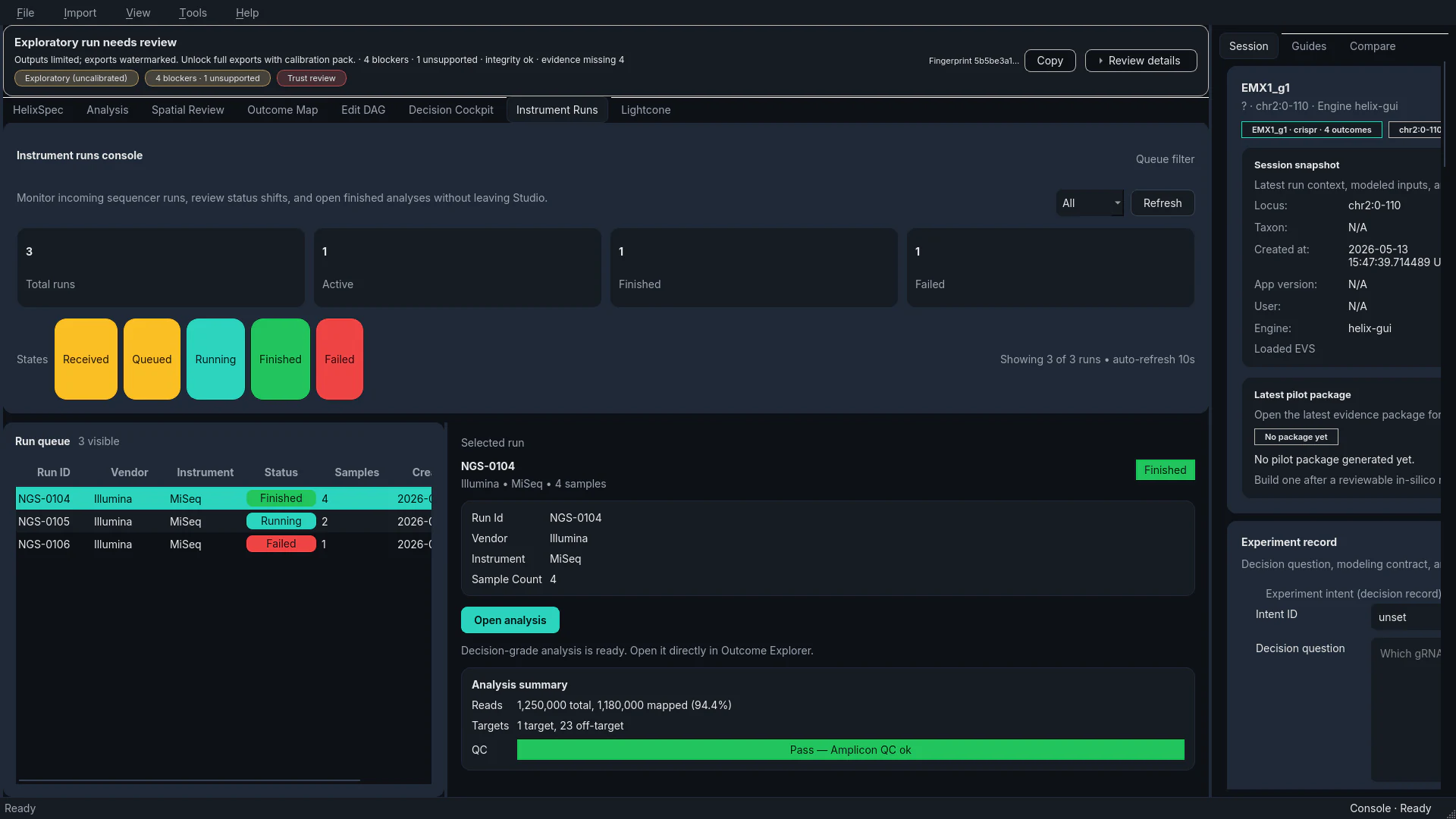
Guides, mismatches, edit windows, model scores, and evidence bundles sit inside one governed interface.
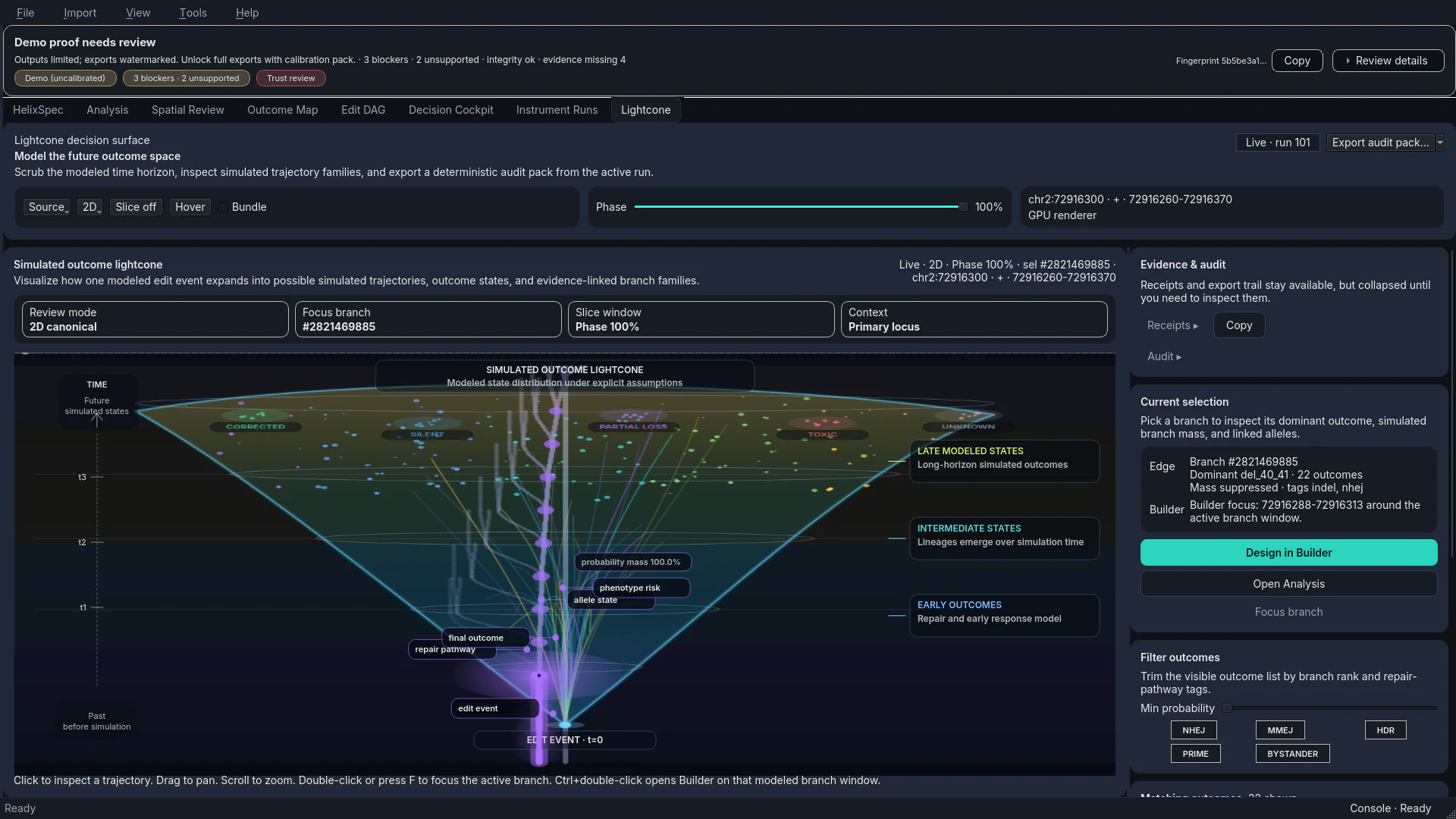
These current Helix captures show the product surfaces directly: design, simulation, modeled outcomes, review, and reproducible artifact generation.
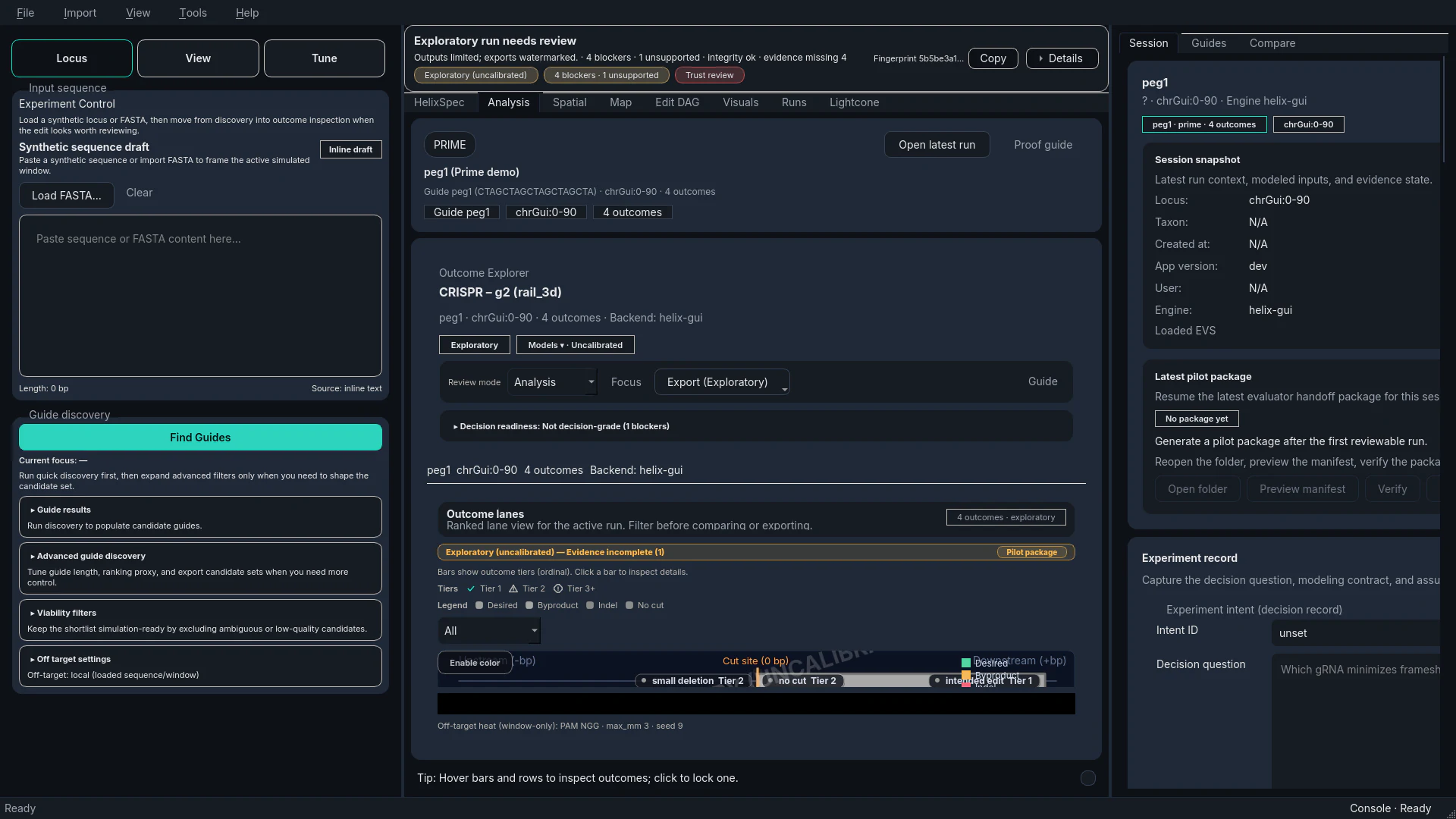
Inspect simulated edit context, constraints, and candidate-level scoring in one workspace.
See blocker state, verifier status, and fail-closed export readiness before handoff.
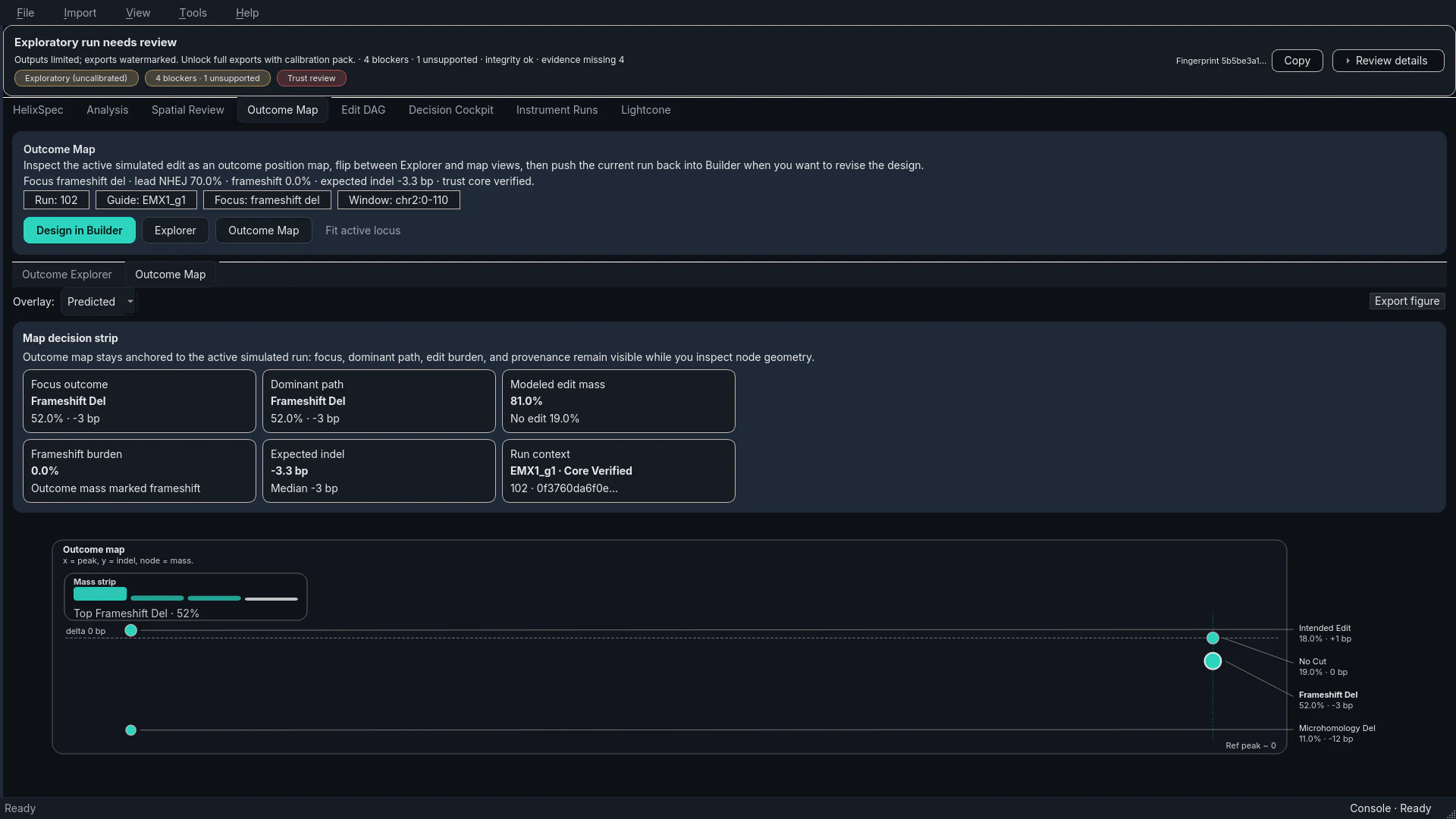
Compare predicted outcomes as visual software artifacts rather than detached exports.
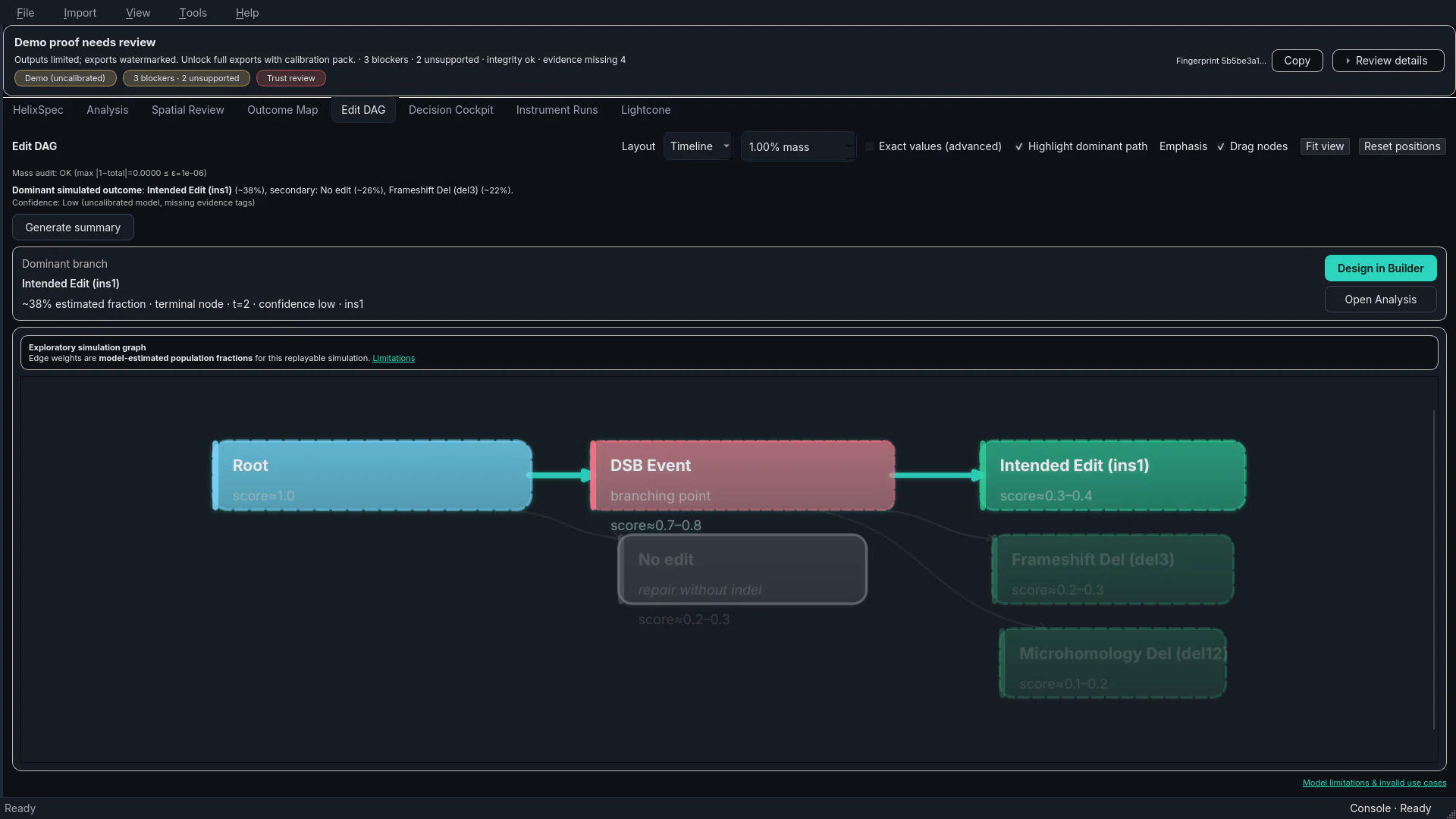
Review provenance-linked decision structure before generating an evidence bundle.
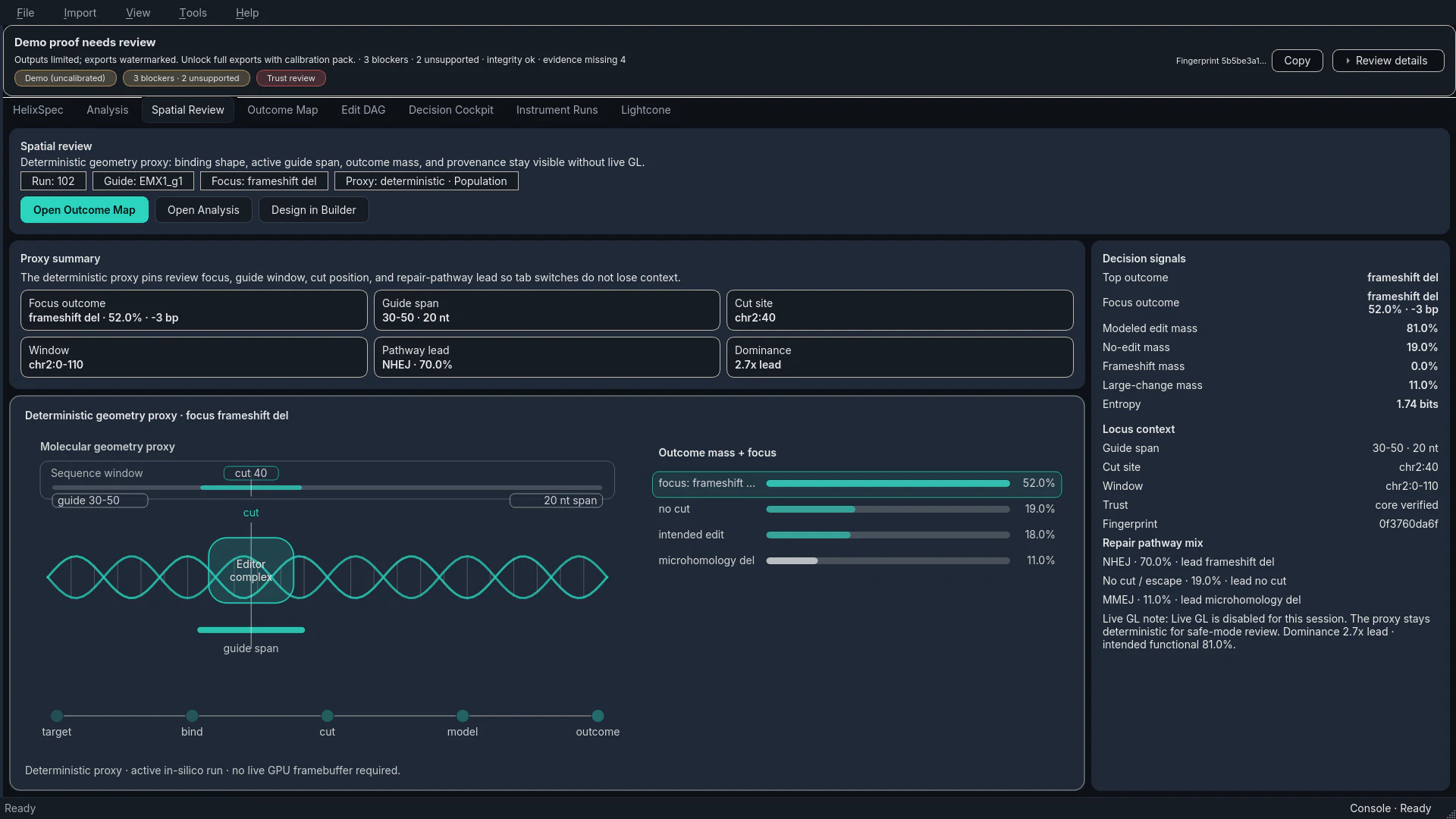
Use high-resolution visual review surfaces for modeled edit interpretation and policy checks.
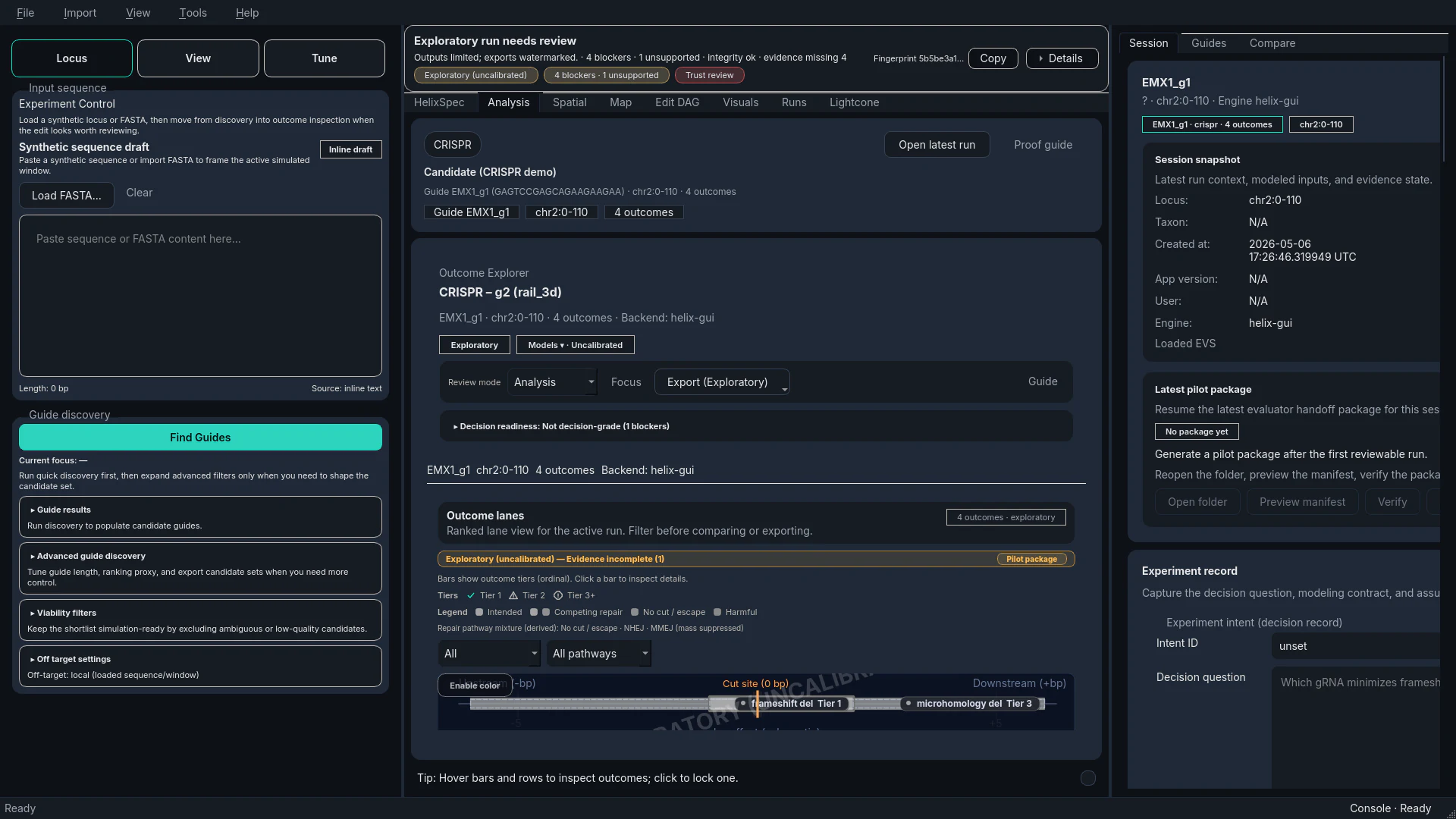
Keep missing artifacts, review posture, and local bundle status attached to the simulated run.
The Genome IDE keeps the editing lifecycle inside one visual contract so decisions can be compared, inspected, and verified.
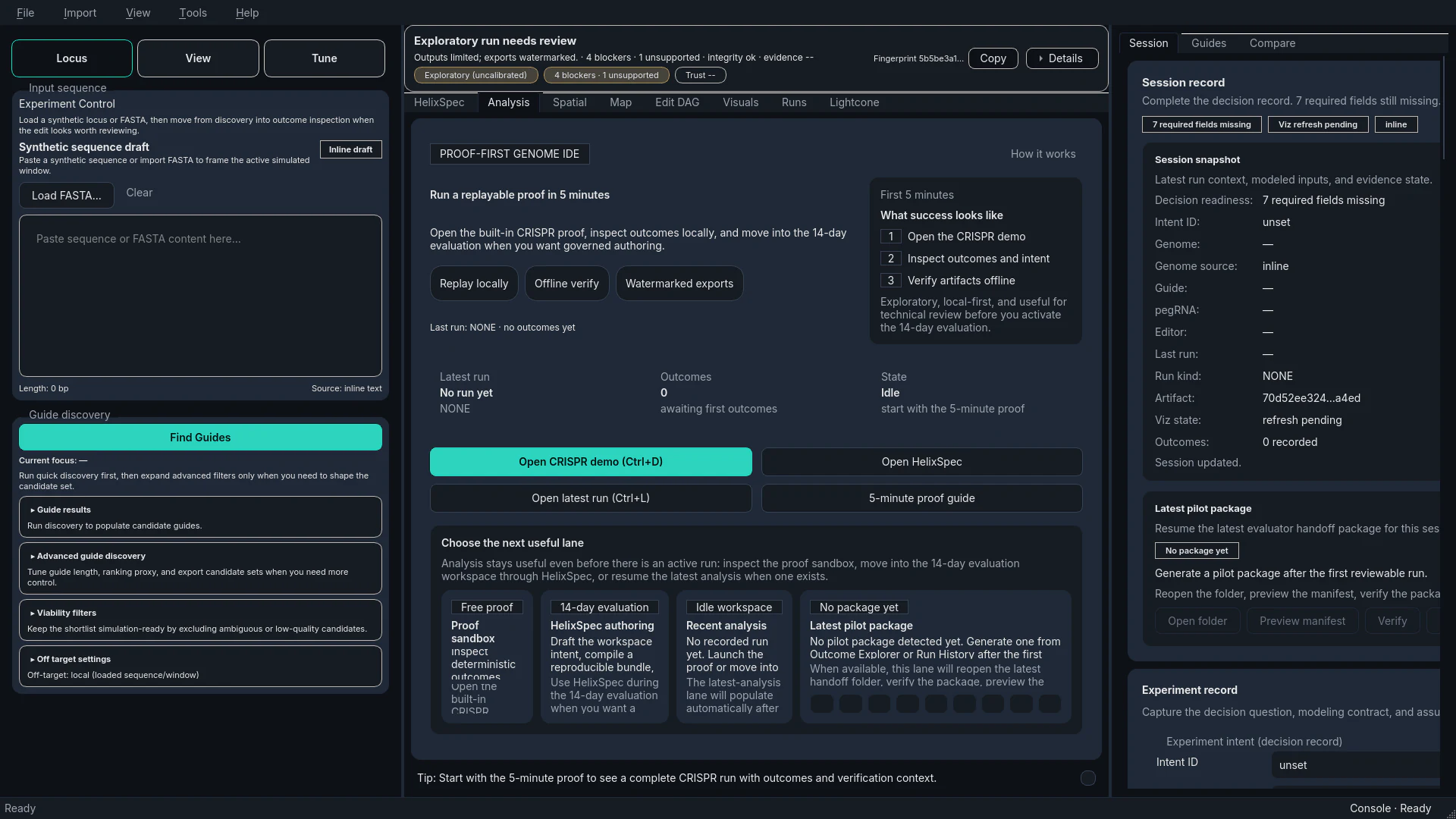
Declare the design objective, target context, and decision scope as structured data.
Model assumptions, thresholds, and policy requirements before downstream review.
Generate simulated evidence, provenance receipts, and checksum-linked artifacts.
Verify signed bundles locally and keep decisions inspectable after handoff.
Omnis Helix treats genome engineering decisions like durable software artifacts: intent is authored, assumptions are modeled, simulated outcomes are scored, policy checks are verified, and the resulting evidence bundle can be replayed months later.
A visual authoring environment for edit intent, candidate structures, genome context, and constraint-aware scoring.
Synthetic inputs, deterministic runs, and model outputs produce evidence artifacts that can be reviewed directly.
Manifests, hashes, provenance receipts, reports, and verifier commands leave as one signed evidence bundle.
Evaluation work becomes calmer when every claim resolves to a deterministic artifact, a policy boundary, and a replayable bundle.
The useful shift is that the simulated decision, the assumptions, and the verification artifact live in the same frame.
Governance reviewerHelix makes the review surface feel like software infrastructure: versioned, inspectable, and ready for deterministic replay.
Platform leadThe Genome IDE pattern removes the usual handoff gap between design intent, model output, and evidence packaging.
Computational scientistStart with the local Studio, then bring Teams/Governance online when policy review, replay verification, and signed bundles become part of the operating model.